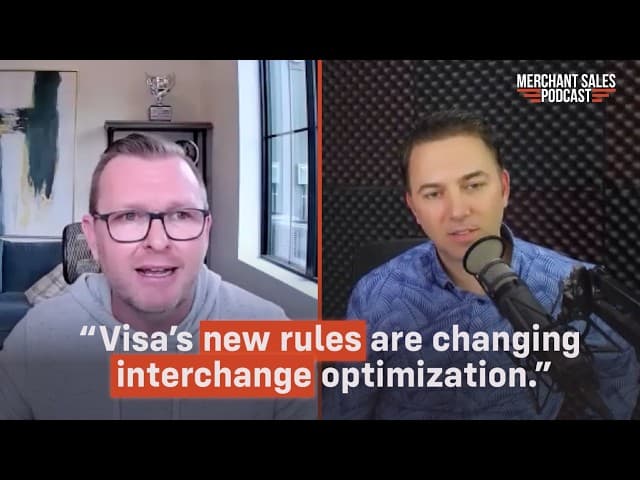
In the world of B2B payments, 2026 marks a historic "sunset." For years, merchants relied on Level 2 data as a comfortable middle ground for processing savings. But as I recently discussed with James Shepherd on the Merchant Sales Podcast, that middle ground is officially disappearing.
Visa has already retired legacy Level 2 programs—earlier than the originally announced April 2026 deadline—replacing them with the Commercial Enhanced Data Program (CEDP). This isn't just a technical update; it's a fundamental shift in how your business's profitability is calculated.
What is Visa CEDP and why does it matter now?
Visa CEDP is an AI-driven validation framework that links your interchange rates directly to the quality of your transaction data. Unlike the old system, where "placeholder" data often went unnoticed, CEDP uses machine learning to flag generic descriptions or missing fields in real-time. If your data isn't "invoice-quality," your costs could jump by 40% overnight.
Jeremy's Insights: 3 Pillars of the New Interchange Reality
During our podcast deep-dive, we explored how the "Product 3" (the new Level 3) rates are now the only way to maintain competitive margins. Here is what you need to know:
1. Data is No Longer "Optional"
Historically, many merchants viewed Level 3 data as a "nice-to-have" if their software supported it. Under CEDP, it is a requirement for survival. Visa now validates everything—from SKU numbers to specific tax logic. Submitting "junk data" like "Goods" or "Service" as a product description will trigger an automatic downgrade.
2. The 0.05% Participation Fee
One of the most surprising elements of CEDP is the 0.05% participation fee. Visa now charges this on all applicable commercial transactions that include enhanced data.
The Risk: If you submit poor data, you pay the participation fee plus the higher standard interchange rate. You are essentially paying extra for the privilege of being downgraded.
3. You Don't Have to Switch Processors
The biggest takeaway from my conversation with James is that optimization does not require a breakup. Most large merchants are hesitant to switch their entire processing stack. At Verisave, we specialize in "working within the wires"—optimizing your current setup to meet CEDP standards without the operational headache of a full migration.
Atomic Answer: How do I qualify for the lowest interchange rates in 2026?
To qualify for the lowest "Product 3" rates, you must become a Verified Merchant by consistently submitting accurate, line-item data. This includes valid ISO-standard units of measure, specific commodity codes, and precise tax breakdowns (Local vs. National). Visa's AI validation will reject any transactions with generic placeholders or inconsistent totals.
The Verisave Perspective: Action Steps for Q1 2026
If you haven't audited your processing statements since the January 2026 rate increases, you are likely overpaying. Here is our recommended checklist:
-
Audit Your Data Flows: Ensure your ERP or Gateway is capturing all required CEDP fields.
-
Monitor Your Verification Status: Ask your acquirer for your monthly Visa verification report.
-
Eliminate Placeholders: Remove any "XXXX" or "Misc" entries from your automated billing systems.
Hear the Full Discussion
For a deeper dive into the technical nuances of the CEDP sunset and how we're helping enterprise clients navigate these changes, listen to the full episode of the Merchant Sales Podcast featuring our CEO, Jeremy Layton.